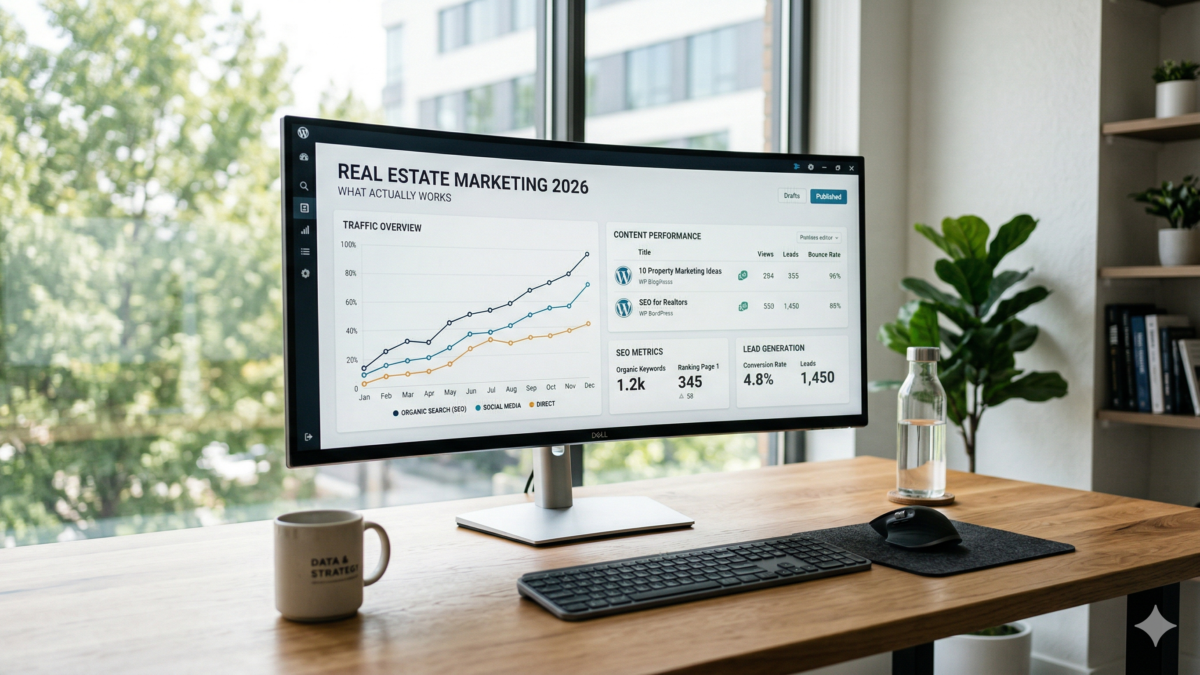
Real estate marketing in 2026 is driven by one thing: consistent, high-quality content that ranks in both Google and AI-powered search. The strategies that work today combine WordPress-based SEO, content automation, and data-driven insights to generate qualified leads without relying heavily on paid ads.
If you’re running a self-hosted WordPress site, you already have the foundation. The challenge is execution—publishing the right content, consistently, and structuring it in a way that search engines and AI systems can understand.
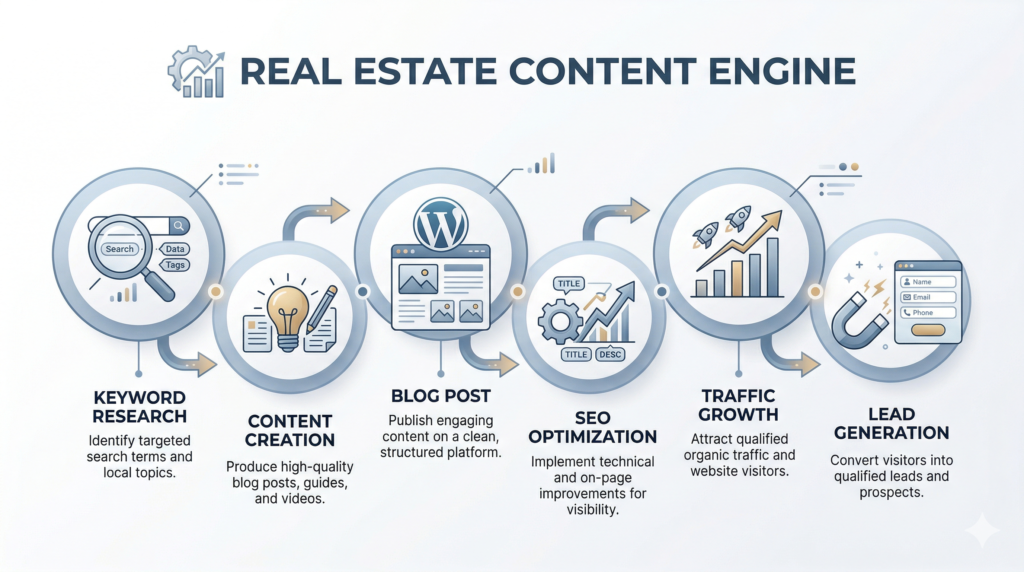
Quick Summary: Real Estate Marketing in 2026
- WordPress provides the ideal SEO foundation for real estate websites.
- Content-driven strategies generate qualified leads more effectively than paid ads alone.
- Automation tools eliminate manual posting while maintaining consistent engagement.
Why WordPress Is Ideal for Real Estate SEO
WordPress dominates real estate marketing in 2026 because its architecture inherently supports search engine optimization without requiring technical expertise. The platform’s clean code structure, mobile responsiveness, and plugin ecosystem create a foundation that search engines reward with better rankings.
Here’s the thing about WordPress that most agents miss: it’s not just a website builder. It’s a content management system designed for discoverability. When you publish a property listing or neighborhood guide, WordPress automatically generates SEO-friendly URLs, creates proper heading hierarchies, and enables schema markup that helps Google understand your content. According to Placester’s 2026 trends analysis, more than 60% of real estate searches now start on mobile devices, and WordPress themes are built mobile-first.
The platform also integrates seamlessly with analytics tools, letting you track which listings generate calls and which blog posts drive traffic. This data becomes invaluable for refining your real estate marketing strategy throughout the year.
Essential WordPress Plugins for Real Estate
The right plugins transform a basic WordPress site into a lead-generating machine. Start with Yoast SEO or Rank Math for on-page optimization—these tools guide you through keyword placement, meta descriptions, and readability scores without requiring SEO expertise.
For property listings, WP Property or Easy Property Listings create professional displays with search filters, map integration, and inquiry forms. These plugins automatically format your listings for rich snippets in search results. Contact Form 7 or WPForms handles lead capture, letting you create custom forms for different property types or buyer stages. Understanding how to avoid ranking without clicks becomes essential when optimizing these forms for conversion.
Pro Tip: Install a caching plugin like WP Rocket alongside your SEO tools. Page speed directly impacts both rankings and user experience—slow sites lose leads before they even see your listings.
Content-Driven Lead Generation for Real Estate Marketing in 2026
Content marketing generates higher-quality leads than paid advertising for real estate because it attracts buyers and sellers actively researching their decisions. When someone finds your neighborhood guide or home-buying tips article, they’re already in the market—not just scrolling past an ad.
The most effective real estate marketing in 2026 centers on creating genuinely useful content that answers specific questions. Think beyond property listings. Write about school district comparisons, local market trends, first-time buyer mistakes, and renovation ROI calculations. This content ranks for long-tail keywords that indicate serious intent.
Blog-driven traffic compounds over time. A well-optimized article about “best neighborhoods for families in [your city]” continues generating leads months after publication. Compare that to paid ads, which stop delivering the moment you stop paying. Learning how to optimize for GEO in 2026 amplifies this effect by ensuring your content appears in AI-powered search results.
Scenario: A local agent published a comprehensive guide comparing three suburban neighborhoods. Within six months, that single post generated 47 qualified buyer inquiries—people who found the article while researching where to move. Total ad spend: zero.
Automating Content Distribution
Creating content is only half the equation. Distribution determines whether anyone actually sees it. Manual posting across multiple platforms drains time that should go toward client relationships.
Automation tools like Buzzin Content Studio handle the distribution workflow entirely within WordPress. Schedule posts to publish at optimal times, automatically share to social channels, and track engagement metrics from a single dashboard. According to Taboola’s marketing research, real estate agents who use a CRM system see a 41% increase in lead conversions—and content automation integrates directly with most CRM platforms.
The key is consistency. Algorithms favor accounts that post regularly. Automation ensures you maintain that consistency even during busy listing periods when manual posting falls by the wayside.
Common Mistakes in Real Estate Marketing in 2026
Most real estate marketing failures stem from ignoring mobile users, neglecting local SEO, and underutilizing video content. These three mistakes cost agents significant lead opportunities every month.
Mobile optimization isn’t optional anymore. If your website loads slowly on phones or requires pinching to read, visitors leave immediately. Google also penalizes non-mobile-friendly sites in search rankings, creating a double penalty for outdated designs.
Local SEO often gets overlooked because agents assume their brand name is enough. It isn’t. You need Google Business Profile optimization, local keyword targeting, and consistent NAP (name, address, phone) citations across directories. Taboola’s research confirms that 46% of all Google searches have local intent—and real estate is inherently local.
Video remains underutilized despite overwhelming evidence of its effectiveness. Property listings with video get 403% more inquiries than those without, according to industry data. Yet most agents still rely solely on photos. Even simple walkthrough videos shot on a smartphone outperform static images.
Warning: Ignoring video in 2026 means losing leads to competitors who embrace it. Start with virtual tours of listings and short market update videos—you don’t need professional production quality to see results.
Signs You Need to Revamp Your Strategy
Declining website traffic signals that your content isn’t ranking or your SEO fundamentals need attention. Check Google Search Console for crawl errors and keyword position drops.
Low social media engagement despite consistent posting suggests your content isn’t resonating. Analyze which posts performed best historically and create more of that content type. High bounce rates indicate visitors aren’t finding what they expected—usually a mismatch between your meta descriptions and actual page content. Understanding generative engine optimization principles helps address these visibility gaps.
What to Avoid in Real Estate Marketing Strategies
Several persistent myths continue misleading agents about effective marketing approaches in 2026. Believing these misconceptions wastes budget and opportunity.
The idea that print marketing is dead oversimplifies reality. Direct mail still works for hyperlocal farming, particularly in demographics that prefer physical materials. The mistake is relying exclusively on print while neglecting digital—or vice versa. Effective real estate marketing in 2026 integrates both channels strategically.
Treating social media as optional guarantees missed opportunities. Platforms like Instagram and Facebook remain primary discovery channels for home buyers researching agents. Your social presence builds trust before prospects ever contact you.
Assuming all leads deserve equal attention wastes time on unqualified prospects. Implement lead scoring based on engagement signals—someone who downloads your buyer guide and visits multiple listing pages demonstrates higher intent than someone who bounced after viewing one page. Exploring the differences between SEO, AEO, and GEO helps you attract better-qualified traffic from the start.
Debunking Real Estate Marketing Myths
The myth that social media doesn’t generate leads persists despite evidence to the contrary. Social platforms generate leads differently than search—they build awareness and trust that converts later. Attribution models often miss this contribution because the conversion happens through a different channel.
Another common myth suggests SEO is too complicated for small businesses or individual agents. Modern WordPress plugins make basic SEO accessible to anyone who can follow a checklist. You don’t need to understand technical algorithms—you need to create helpful content and let the tools handle optimization signals.
Don’t: Dismiss digital channels because you can’t directly attribute every lead.
Do: Track assisted conversions and recognize that multiple touchpoints influence buying decisions.
Expert Tips for Real Estate Marketing in 2026
Data analytics separates top-performing agents from the rest by enabling targeted marketing that reaches the right prospects with relevant messages. Generic campaigns waste budget on audiences unlikely to convert.
Start by analyzing your past clients. Which neighborhoods did they come from? What price points? What life stages? This data reveals patterns you can target through lookalike audiences on social platforms and keyword strategies in content. According to 2Point Agency’s strategic guide, empathy-led marketing that addresses specific client needs consistently outperforms generic promotional content.
Personalized communication dramatically increases response rates. Segment your email list by buyer stage, property interest, and engagement level. Someone actively searching deserves different messaging than someone who downloaded a guide six months ago. Effective keyword analysis strategies inform this segmentation by revealing what different audience segments actually search for.
Staying Ahead of Trends
Following industry leaders on social platforms and subscribing to real estate marketing newsletters keeps you informed about emerging tactics before they become saturated.
Participating in webinars and virtual workshops provides tactical knowledge you can implement immediately. Many platforms offer free training on their tools—take advantage of these resources. Networking with peers through local associations and online communities surfaces insights that never appear in published content. Agents often share what’s working in private groups before tactics become widely known. Learning how to create blog posts quickly in WordPress gives you the agility to act on these insights immediately.
The agents who thrive in real estate marketing in 2026 combine proven fundamentals—quality content, local SEO, consistent engagement—with emerging tools that multiply their efforts. WordPress provides the foundation; automation handles the execution; and your expertise drives the strategy that makes it all work together.